
Rubber-coated roller is a kind of roller conveyor, is the most important part of the roller conveyor, roller coating can effectively improve the operating conditions of the conveyor system, to protect the metal roller from wear and tear, but also to prevent the conveyor belt from slipping, so that the synchronization of the roller and the belt to run. The quality of rubber-coated roller is also affected by a variety of aspects, such as rubber product selection, construction technology, the degree of technology of rubber-coated workers also have a certain impact on the quality of rubber-coated. Manufacturers of rubber coating technology, the current rubber coating technology has hot vulcanization coating and cold vulcanization coating, but the mainstream market has been hot vulcanization process has been replaced by cold vulcanization chemical;
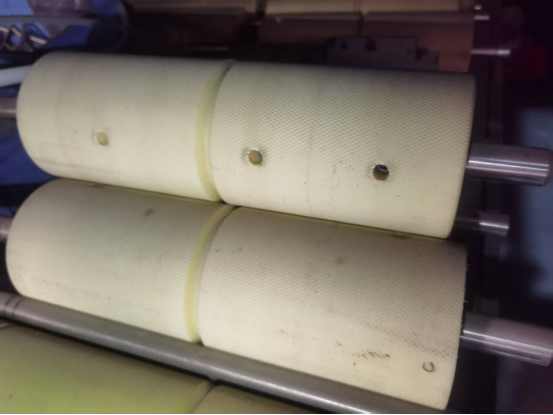
Glued roller sprocket teeth should be no residual cracks or serious wear, sprocket bearing horizontal circle of the plane of the maximum wear: pitch less than or equal to twenty-two millimeters, shall not exceed five millimeters; when the pitch is greater than or equal to twenty-two millimeters, shall not exceed six millimeters (can be used to level the circular chain placed on the sprocket, check the upper surface of the circular chain and the hub of the distance). The sprocket of the rubber-coated roller can not be carried out at the same time there is axial tampering. Double chain sprocket and frame clearance on both sides should meet the requirements of the design, generally not more than five millimeters. Rubber-coated drum guard plate, chain splitter without deformation, no card touch phenomenon during operation, the tongue shall not have cracks, the maximum wear shall not exceed twenty percent of the thickness. The elastic element of the coupling, the material and size of the shear pin should be in accordance with the provisions of the technical documents. The shield has no cracks, no deformation, and is firmly connected.
As the rubber-coated roller for the metal material, in the production process by vibration impact and other composite forces, will lead to roller bearing bit wear and other failures. For conveyor belt roller repair, the traditional methods of surfacing, thermal spraying, brush ferry, etc., but there are certain drawbacks: the thermal stress generated by the high temperature of the filler welding can not be completely eliminated, easy to cause material damage, resulting in bending or fracture of the parts; and brush plating by the thickness of the coating is limited, easy to flake off, and the above two methods are metal to metal repair metal, can not change the “hard-to-hard” fit relationship, in the case of a hard-to-hard connection, the roller can not be replaced, and the roller will not be able to be replaced. The above two methods are to repair metal with metal, which cannot change the “hard-to-hard” relationship, and under the combined effect of various forces, it will still cause the re-wear of rubber-coated rollers.
Post time: May-26-2025